








The story of PowerOn Midwest

Where and how we use and generate power is changing.
As large, aging power plants are retired in the coming years, we're shifting to other forms of generation that can be more flexible and scalable for our region's new energy needs.







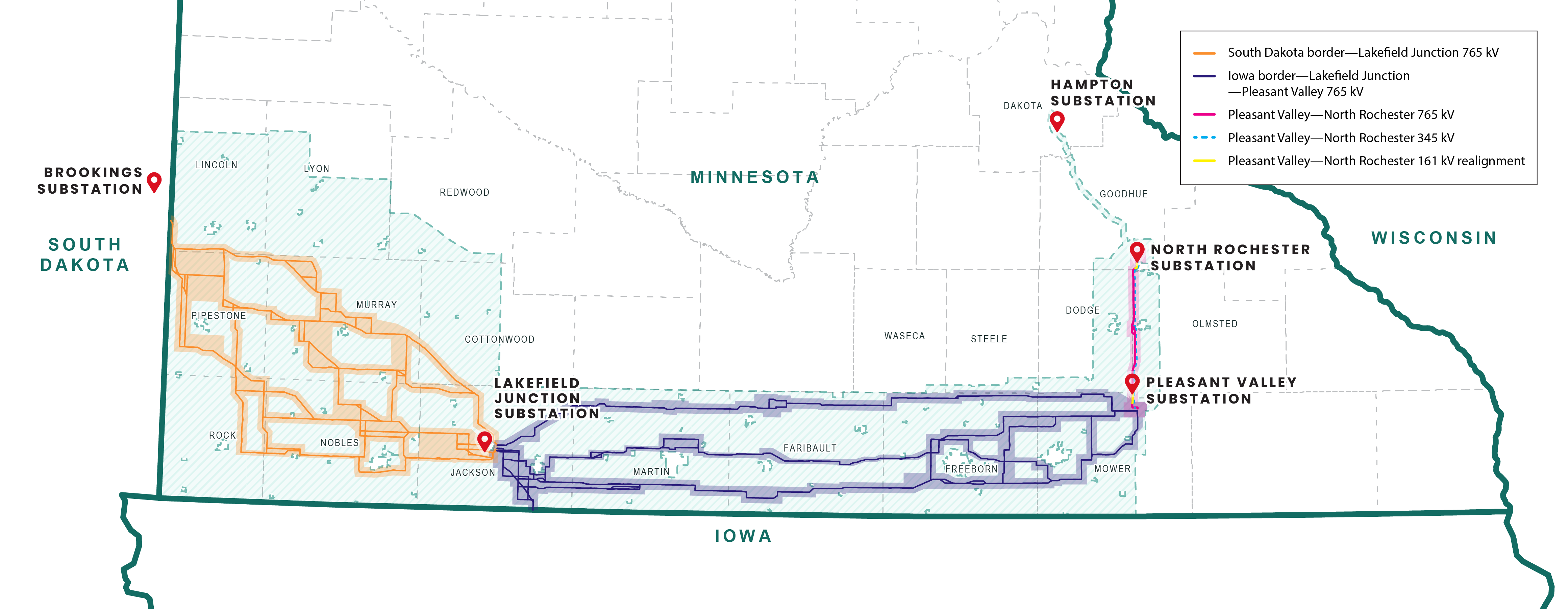
Preliminary route options
This map shows the area that is being studied during routing discussions. PowerOn Midwest will offer multiple opportunities for stakeholders, Tribal entities, landowners, and the public to provide input into the route development process.
- South Dakota border-Lakefield Junction 765 kV (MISO LRTP #22)
- Iowa border-Lakefield Junction-Pleasant Valley 765 kV (MISO LRTP #23 & #24)
- Pleasant Valley-North Rochester 765 kV (MISO LRTP #24)
- North Rochester-Hampton 345 kV(MISO LRTP #25)
Visit our interactive comment map later in this virtual open house to share your thoughts on preliminary route options.
Key benefits
PowerOn Midwest is a studied solution that maintains reliability and delivers key benefits.
-
Reliable electricity
Delivers on our commitment to customers that electricity is delivered where and when it's needed—regardless of the weather, electric generation source, or demand.
-
Future-ready grid
Addresses rising electricity demand, which is projected to grow significantly over the next two decades.
-
Customer and economic benefits
Enables more cost-effective generation while improving reliability, opening doors for future economic growth across the region.
-
Access to new electric generation
Supports a range of energy sources added to the grid, providing a balanced and reliable power supply for the future.




Regulatory process
Learn about the two main regulatory processes that PowerOn Midwest must go through: the Certificate of Need and Route Permit processes.
 Public participation opportunity
The CON identifies the issues the proposed project is designed to solve (the need for the project) and reviews how the project benefits the state and region. The application must include the type of infrastructure proposed, size, general engineering information, estimated costs, system alternatives that were evaluated, and other state required information. PowerOn Midwest submitted a CON application to the MPUC on February 3, 2026.
- Application filing and completeness review
- Intervention opportunity
- Environmental Report scoping public meetings
- Scoping decision
- Environmental Report
- MPUC public hearings for the CON
- MPUC CON decision







Step 1: Application filing and completeness review
The MPUC reviews the application for completeness and invites public comment. Once deemed complete, the case is typically assigned to an independent Administrative Law Judge, who presides over the review process.
The Commission determined the Certificate of Need Application was complete on April 6, 2026.
Step 2: Intervention opportunity
Anyone can attend meetings and submit comments without formally intervening, i.e. becoming a "party" to the proceeding. Persons who want to become a party must submit a request to the Administrative Law Judge. Parties may present formal arguments, testimony, and cross examine witnesses - often with legal representation (although not required for individuals). Formal intervention is not required to submit comments on the application.
Step 3: Environmental Report scoping public meetings
The MPUC prepares an Environmental Report (ER) to evaluate human and environmental impacts related to a project. Public meetings were held April 21-30, 2026 to explain the process and gather comments on issues and alternatives that should be addressed in the Environmental Report. The comment period for the Environmental Report scoping meetings closed on May 20, 2026.
Step 4: Scoping decision
Before the MPUC prepares the Environmental Report, it reviews all public input and publishes its Scoping Decision, which outlines the issues to be addressed in the Environmental Report.
Step 5: Environmental Report (ER)
The MPUC gathers information, then prepares and publishes the ER, which must be done before public hearings can take place.
Step 6: MPUC public hearings for the CON
The MPUC holds public hearings presided by an Administrative Law Judge. Notice is published in local newspapers and mailed to landowners and local governments prior to the start of the hearings. Anyone can present comments and express opinions concerning the utilities' proposal or alternatives and the ER. The Administrative Law Judge provides a report that summarizes the hearing record, including public comments, and makes recommendations to the MPUC.
Step 7: MPUC CON Decision
The MPUC makes the final decision about whether to issue a Certificate of Need. In making its decision, the MPUC considers all information in the record and deliberates at a formal MPUC meeting.
A Route Permit is also required from the MPUC prior to building a high-voltage transmission line. A Route Permit application identifies where a transmission line will be located. The Route Permit application also discusses both constraints and opportunities for the new infrastructure that minimizes the overall impact of the project.
- Application filing and completeness review
- MPUC Environmental Impact Statement (EIS) scoping public meetings
- Draft EIS
- MPUC public hearings
- Final EIS
- MPUC Route Permit decision






Step 1: Application filing and completeness review
After a utility files a Route Permit application and it is accepted as complete, the regulatory review process begins.
Step 2: MPUC Environmental Impact Statement (EIS) scoping public meetings
For this project, the MPUC will develop an EIS to identify the potential impacts the transmission line may have in the area where it has been proposed. An EIS typically analyzes, among other things, potential impacts on land use, including agricultural operations, residences, water resources, and other natural resources.
The MPUC will hold public meetings to present information about the project, answer questions from the public, and take comments on the issues that the EIS should address.
In Minnesota, the public may suggest alternate routes for the MPUC to consider in its review and those routes may be considered alongside the route proposed by the utilities. The route options must be specific, including starting and ending points, and may vary in length from a minor shift to many miles. The MPUC will provide information on how to suggest alternate routes and will determine which alternatives should be studied in the EIS.
The MPUC then publishes a scoping decision outlining what the EIS will address and what route alternatives will be included in their review.
Step 3: Draft EIS
The Draft EIS will be made available for review and comment by all stakeholders and the general public.
Step 4: MPUC public hearings
Once the Draft EIS is published, the Administrative Law Judge conducts public hearings, which are designed to receive comments on the routes under review, and how potential impacts of the project could be addressed. The Administrative Law Judge prepares a report summarizing the hearings and makes routing and condition recommendations to the MPUC.
Step 5: Final EIS
The MPUC issues a Final EIS.
Step 6: MPUC Route Permit decision
The MPUC makes its final Route Permit decision at one of its formal meetings after reviewing all materials. A permit can only be issued after a CON is granted. The Route Permit is the only approval required to determine the route of the the transmission line. If the Route Permit is approved, utilities will work to obtain other required permits based on that route - like DNR stream crossing approvals.
Route development process
Input from landowners, community members, local leaders, Tribal representatives, and state and federal agencies as well as the project team's own expertise is critical as we develop and finalize a proposed route.

We started by using data from publicly available sources and federal, state, and local agencies to define a study area. We consider existing utility corridors, existing land use, resource areas, and other data to help identify route opportunities to further refine the study area.

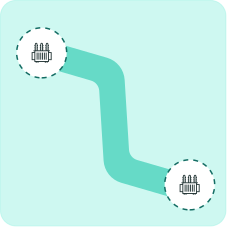
The next step in the route development process is to identify a route corridor where a possible route could be located and identify preliminary route options. We have developed route corridors based on public input, opportunities to minimize impacts, and where the new transmission line will need to connect into substations.
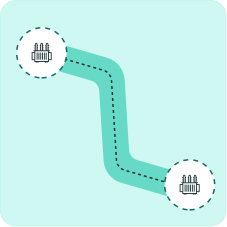
The preliminary route is a further narrowed area within the route corridor. Similar to the route corridor, we will develop the preliminary route based on input gathered during public open houses, input from community members, local leaders, Tribal representatives, and state and federal agencies. These factors will assist the project team as we develop the proposed route for permit applications.
Finally, the project team will use all of information and public input we have gathered throughout the route development process to develop a proposed route that we will submit to the MPUC in late 2026.
MPUC will issue a final determination on the route.
Routing considerations
Utilities are required to consider various routing criteria per Minnesota Statutes chapter 216i and Minnesota Rule 7850.4100. Those criteria and industry best practices include:
Opportunities
 Opportunities
Linear features that are oriented in the direction of the project:
- Field lines
- Property lines
- Section lines
- Roads
- Utility corridors
Sensitivities
 Sensitivities
Area resources or conditions that may require additional review and consideration:
- Agricultural conflicts
- Airports (public)
- Cemeteries
- Communication towers
- Conservation areas/nature preserves
- Contaminated areas
- Cultural/historic resources
- Forest
- Hospitals
- Levees/dams
- Mines/quarries
- Pipelines*
- Planned development
- Protected federal lands
- Protected state lands
- Railroads*
- Recreation
- Religious facilities
- Residences
- Scenic byways
- Schools/daycares
- Sensitive species
- Streams/wetlands
Structures
Why 765 kV technology?
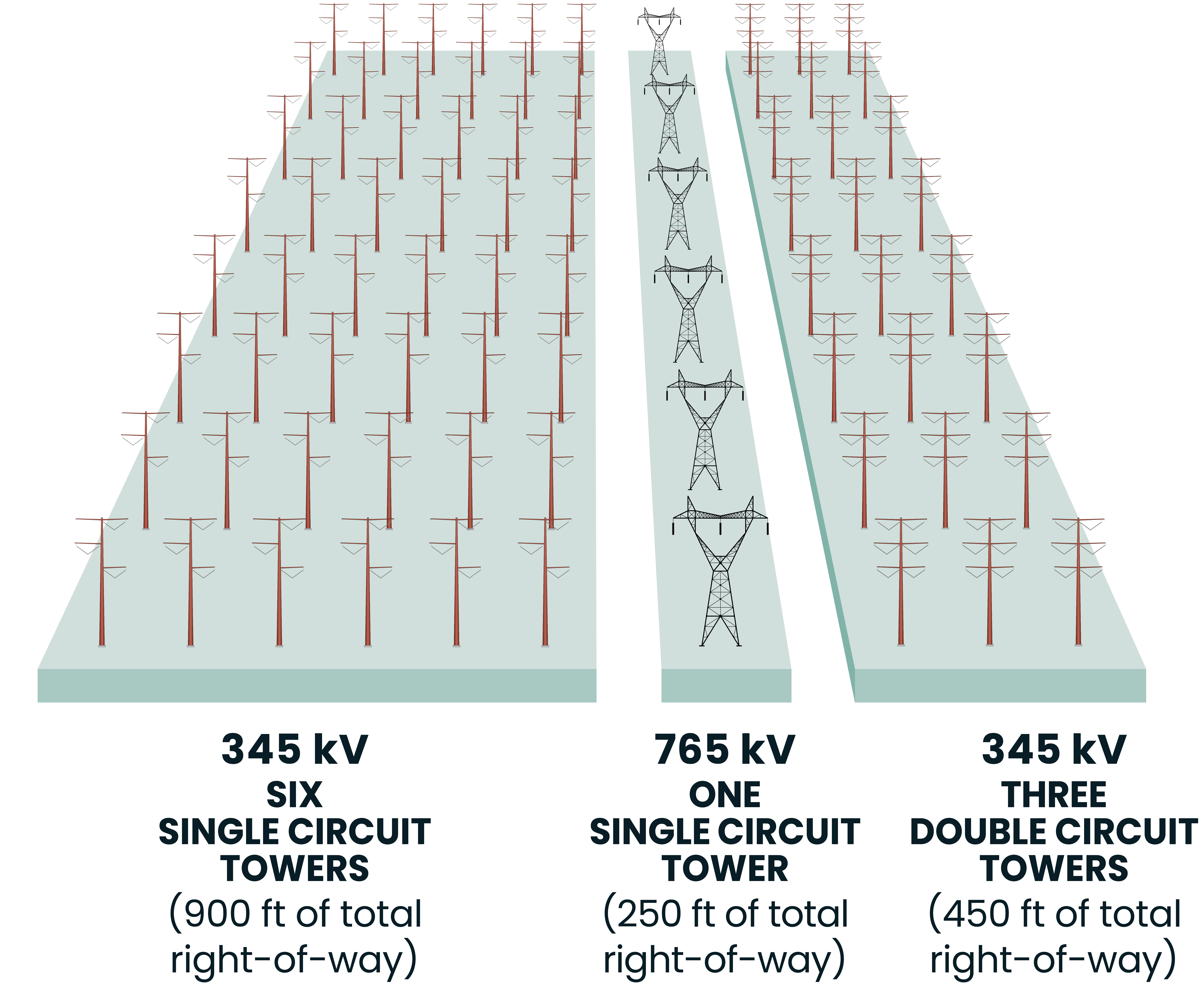
765 kilovolt (kV) technology was identified in the planning process as the preferred solution for the region, presenting several advantages:
- Efficiently carries power over long distances
- Fewer transmission lines needed to carry the same amount of power (see diagram)
- Fewer structures reduce impact on land, communities, and the environment
- Resilient infrastructure that can consistently deliver power
- Provides backup power pathways to deliver energy to customers
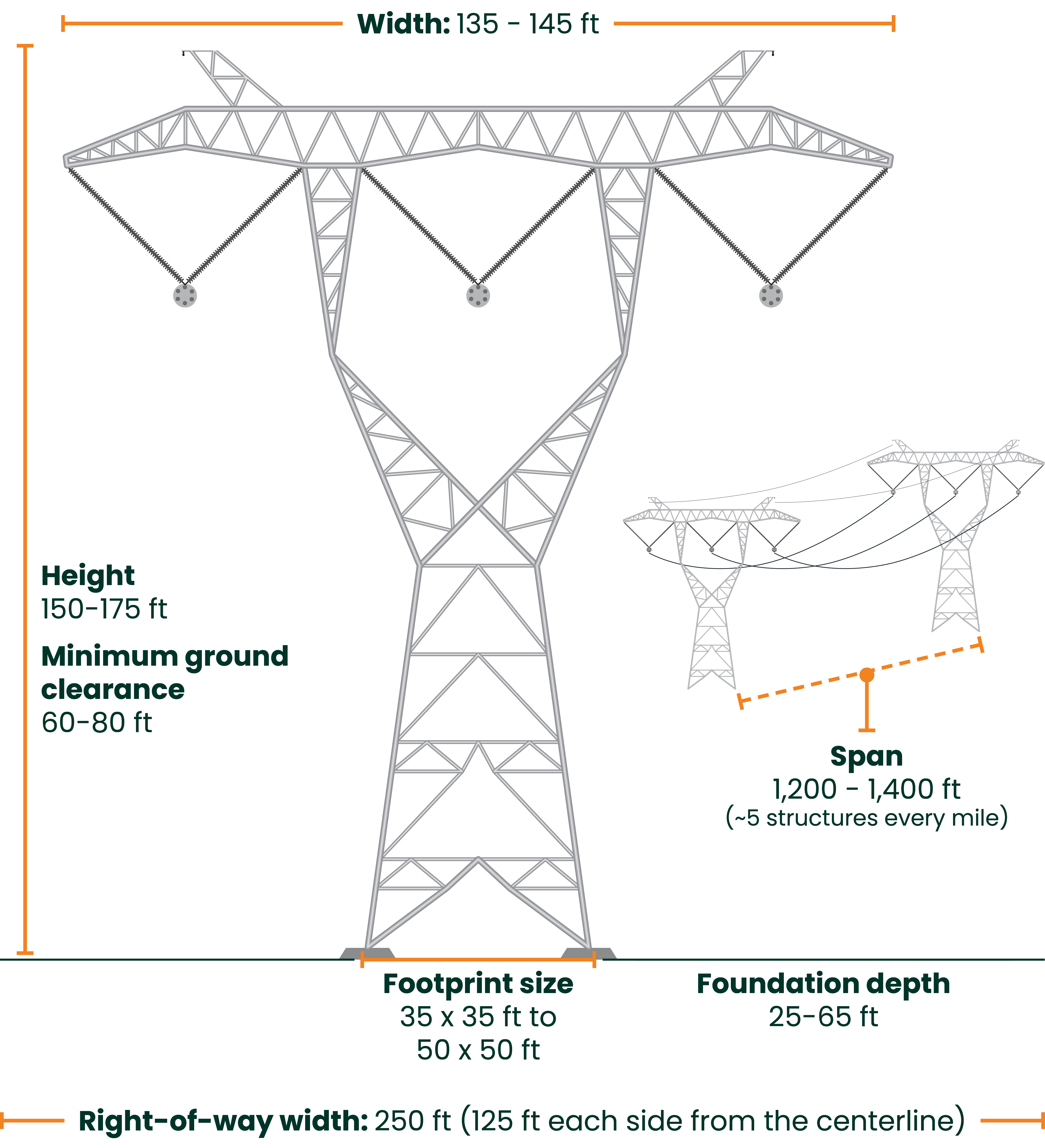
Typical 765 kV structures
Transmission structures play a vital role in the delivery of electricity. They support the components that are used to transport electricity. PowerOn Midwest is working with landowners and the community to power our region today and into the future.
Typical 345 kV structures
These images show the existing 345 kV structures and the new preliminary structures for on the Pleasant Valley to North Rochester segment only.
Existing typical wood and steel H-frame structure
(single circuit)

Height: 70-110 ft
Width: 54 ft
Span: 400-1,000 ft
Minimum ground clearance: 26-38 ft
Foundation depth: Varies
Right-of-Way Width: 150 ft
Preliminary typical structure
(double circuit)

Height: 90-160 ft
Width: 14-50 ft
Span: 800-1,200 ft
Minimum ground clearance: 26-38 ft
Foundation depth: 30-40 ft
Right-of-Way Width: 150 ft
Land rights overview
What are land rights?
Land rights is the name used for the property rights acquired by the utility used for the construction, operation, and maintenance of a transmission line. Most often, the land rights acquired are easements.
What is an easement?
An easement allows the utilities the right to construct, operate, and maintain a transmission line and other associated infrastructure on a landowner's property.
Our land acquisition process
Project representatives will hold individual meetings with affected landowners to discuss land rights.
-
Utilities contact landowners to begin the easement discussion.
-
Easement process is discussed with landowners. An offer is based on current market values (similar properties) and other property specifics.
-
The utilities work closely with the landowner to resolve concerns and reach agreement. If unable to agree, as a last resort, state law provides for an eminent domain process.
-
The utilities construct, operate, and maintain the transmission line within the easement.


